
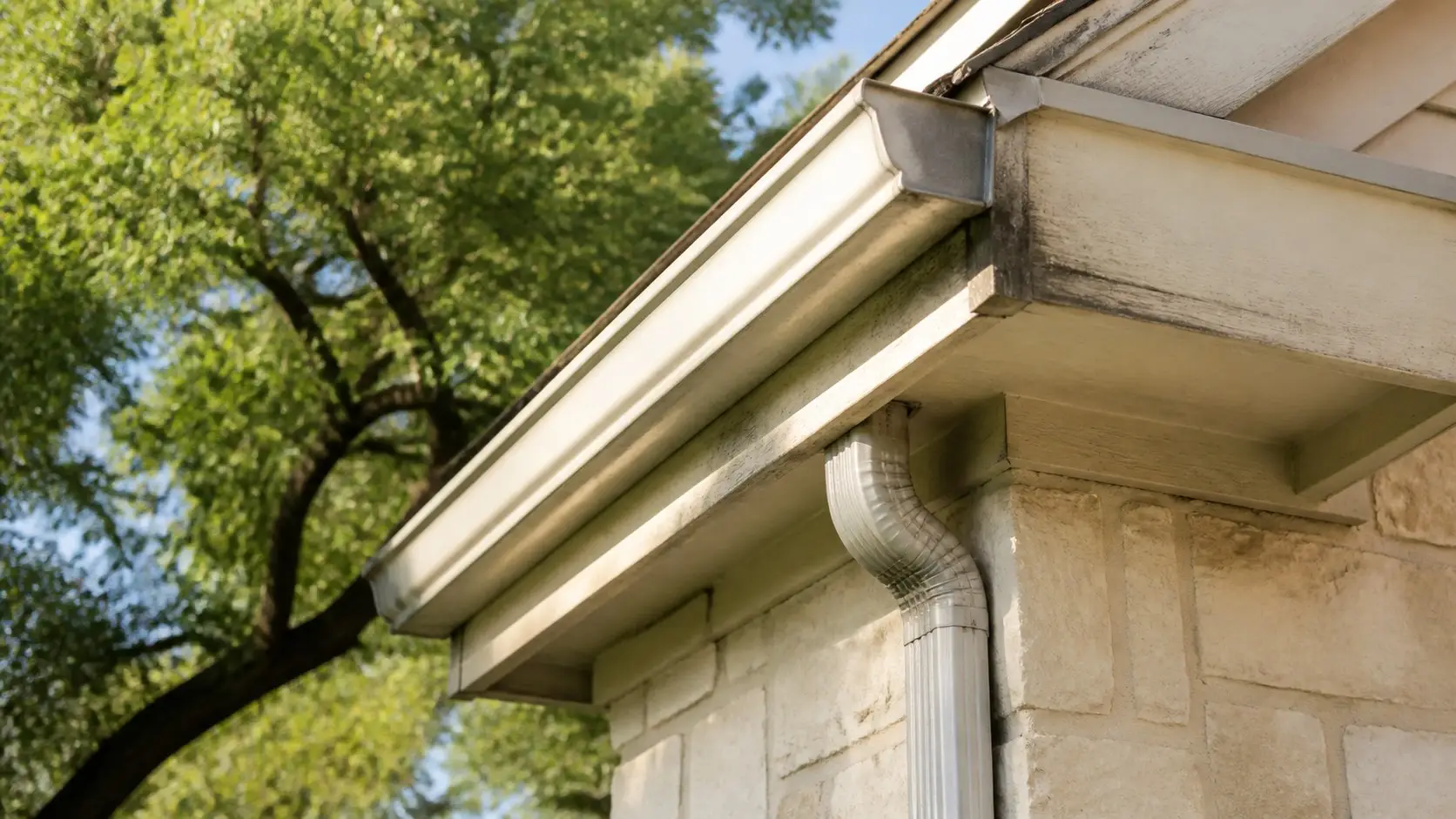

Summary: Austin’s late-summer heat can reveal hidden gutter problems like seal fatigue, loose hangers, and fascia damage that are easier to spot in dry weather. Inspecting and repairing these issues now, before September storms arrive, helps prevent bigger drainage and water damage problems later.
Austin heat does not damage every gutter system, but it can reveal weak seals, stressed fasteners, and aging fascia. Late summer is a useful inspection moment because dry weather makes stains, gaps, and movement easier to see. Repairing small failures before September rain helps keep roof runoff controlled when storms return.
A focused rain gutter repair inspection can separate normal late-summer wear from movement that needs attention before the next storm. Austin heat often makes small defects easier to see, which gives homeowners a chance to act before water starts proving the point the hard way.
Heat Makes Small Movement Easier to Notice
Late-summer heat can expand materials, dry out sealant edges, and make small gaps easier to spot. That does not mean the sun is the only cause of a gutter problem. It means August is a revealing time to inspect corners, end caps, fascia lines, and downspout straps before rain hides the evidence.
A targeted rain gutter repair visit can determine whether a visible gap is cosmetic, localized, or part of a larger attachment issue. The best repair begins with why the component moved, not just where water appeared last time.
Heat can also make old caulk lines, paint edges, and hairline separations stand out visually. That evidence is useful, but it should be interpreted alongside slope and water behavior. A repair visit can confirm whether the component is still aligned to drain or merely showing cosmetic age.
Where Heat-Related Symptoms Usually Appear
| Symptom | Where to look | Likely concern | Next step |
|---|---|---|---|
| Hairline gap | End cap | Seal fatigue | Reseal or replace |
| Dark streak | Behind gutter | Backflow | Check drip edge |
| Sag | Long run | Loose hanger | Rehang |
| Rattle | Downspout | Loose strap | Secure route |
Heat-related inspection is about patterns. One small stain may be old, but a stain below the same corner, a gap above it, and soil disturbance beneath it create a stronger repair case. Downspouts can also loosen when straps age or when summer yard work bumps an extension out of alignment.
Photographing these details before a storm helps a contractor compare dry evidence with wet performance.
Sealant Is Not a Whole-System Fix
Resealing a corner can be the right repair when the gutter is otherwise sound. It becomes a poor fix when the corner keeps separating because the run is sagging, the outlet is clogged, or water sits in the channel after every rain. New sealant placed over an uncorrected movement problem usually fails again.
The article on gutter repair versus replacement is useful when damage is no longer limited to one joint. Widespread leaks, repeated fastener failure, or undersized capacity can shift the better answer from patching to replacement.
Homeowners should also ask what preparation is needed before sealing. Dirty, wet, or unstable surfaces shorten the life of even a good product. Proper cleaning, drying, and alignment make the repair more dependable than simply adding another bead over an old one.
Fascia Tells Part of the Story
Fascia boards and trim often show the history of a gutter problem. Peeling paint, soft wood, swelling, and staining behind the gutter may mean water is passing where it should not. A gutter can look mostly straight from the yard while the backing material is weakening behind it.
Repair should confirm that new hangers have a sound attachment point. Fastening a heavy water-filled gutter into compromised wood may hold briefly, but it does not restore reliable drainage. When fascia damage is present, the repair plan should address both support and water entry.

Look for stains that begin above the gutter rather than below it. Water behind the gutter may indicate a roof-edge or drip-path issue, while staining below a corner often points to a joint or outlet. The location of the stain changes the likely repair.
Downspouts Can Shift in Summer
Downspout straps, elbows, and extensions live in the busy part of the property. They are near mowing, edging, hoses, trash bins, pets, and landscape work. By August, an extension may be disconnected or aimed toward soil that has already settled from summer watering patterns.
That matters because a repaired gutter still fails the property if water discharges too close to the house. The earlier post on overflowing gutters during heavy Austin rain explains how outlet and downspout restrictions can make the roof-edge symptom look worse than it really is.
Extensions are especially easy to overlook during dry weather because they do not seem urgent when no water is flowing. Once September rain returns, a disconnected extension can send a concentrated stream into soil that has already pulled back from the foundation edge during summer heat.
What to Check Before the First Fall Storm
Walk the property after a dry day and look along the gutter line from several angles. Note any gap between the back of the gutter and fascia, a corner that appears lower than the run, an elbow with staining, or a downspout that moves when touched gently from the ground. Avoid climbing or pushing on sections overhead.
If you see a pattern, schedule service before a storm makes access harder and damage harder to separate from new rainfall. For local verification, the business profile connected to Austin heat gutter repair confirms Rockstar Rain Gutters and its Central Texas service presence.
Do not rely only on the front elevation. Side yards, rear rooflines, and narrow service areas often hide the gutter sections that do the hardest work. Walk the entire perimeter when possible, especially where upper roofs drain onto lower runs.
When Repair Should Wait for Replacement Planning
Sometimes the most honest repair recommendation is to stop spending money on small patches. If multiple sections are bent, fasteners fail across the home, or the system is too small for roof runoff, replacement planning may offer better value. That is especially true when the same problem returns after several service visits.
August is a good time to make that decision because homeowners can plan before the calendar fills with fall storm calls. A measured scope, clear photos, and a written explanation make the choice easier than reacting during an active leak.
Replacement planning does not always mean immediate installation. Sometimes it means documenting measurements, confirming preferred materials, and deciding what budget range makes sense if fall storms confirm the same weak points. That preparation keeps homeowners from making rushed choices during a leak.
The Rockstar Rain Gutters Invitation
Rockstar Rain Gutters can inspect Austin heat gutter repair concerns and repair the gaps, loose hardware, and drainage details that late-summer weather exposes; call (512) 400-4381 today. Request a free quote before small heat-revealed problems become fall storm damage.
Related reading: For seasonal planning, see Holiday Guest Prep: Gutters for Austin Short-Term Rentals.