
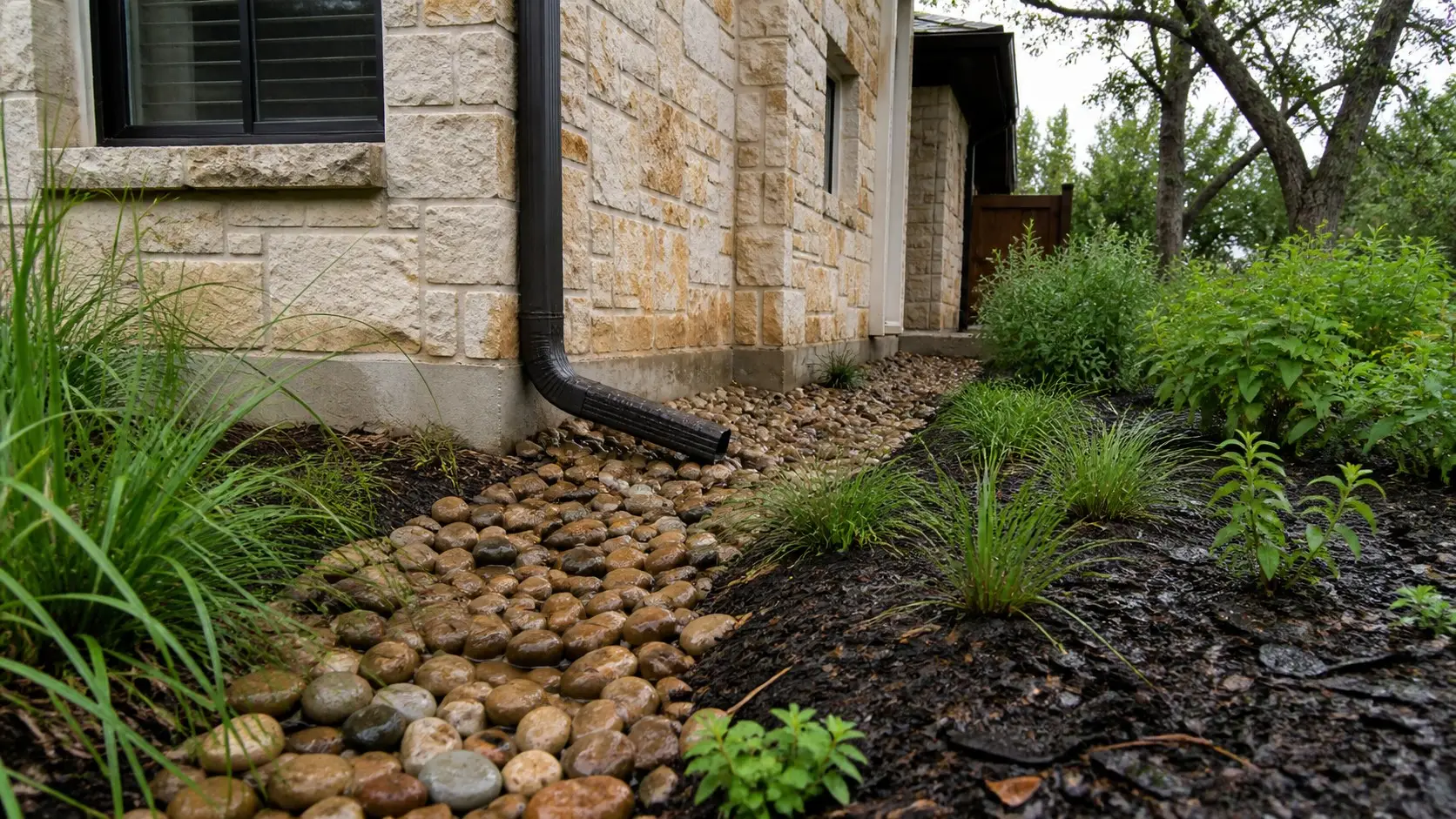

Summary: Landscaping washout in Austin often starts with a downspout discharge point that no longer fits the yard, not the gutter itself. Homeowners should trace water from roof to ground, check extensions and grading after yard work, and call Rockstar Rain Gutters for a drainage-focused inspection.
Gutter water can damage landscaping when downspouts discharge too close to beds, slopes, walkways, or bare soil. September rain makes these patterns easier to see because water moves across the yard before homeowners have fully shifted into fall maintenance. Fixing the discharge path protects plants, mulch, soil, hardscapes, and the foundation edge at the same time.
A complete rain gutter services visit can trace water from the roof edge to the final discharge point. That matters for Austin landscaping because mulch washout, soil channels, and pooling often begin with a downspout route that no longer fits the yard.
Start Where the Downspout Ends
Landscape washout is often blamed on the gutter, but the first place to inspect is the downspout discharge point. If water exits into loose mulch, bare soil, a sloped bed, or a walkway edge, even a well-functioning gutter can create erosion. The problem is not collection; it is uncontrolled release.
The broader rain gutter services path is useful because gutter drainage involves cleaning, repair, downspout adjustment, and sometimes installation changes. The right answer depends on where water starts causing damage.
Do not assume the nearest bed is the right discharge area. A short extension may seem tidy, but it can send water into mulch that floats or soil that channels quickly. The discharge point should be chosen for stability, not convenience alone.
Also check whether the discharge point is lower than the surrounding grade. A shallow depression can hold water even when the extension points away from the house. Correcting that low spot may be as important as changing the downspout route after repeated rain.
That detail matters most beside new planting beds, where fresh soil can settle quickly.
Why September Reveals Yard-Level Problems
In September, a storm can show how summer landscaping changes affected drainage. New mulch may float, soil may have settled, and extensions may have been moved during lawn work. Water takes the easiest path, and that path may now be through a bed that looked stable in dry weather.
The article on downspout planning before wetter months is directly related. It explains why timing matters when roof runoff is about to become more active.
Landscape Washout Clues
| Clue | Likely source | Risk | Fix direction |
|---|---|---|---|
| Mulch fan | Short downspout | Bed erosion | Extend flow |
| Soil trench | Concentrated outlet | Root exposure | Diffuse or reroute |
| Pooling | Flat discharge | Foundation moisture | Move water away |
| Walkway silt | Cross-flow | Slip hazard | Redirect path |
Small clues tell the story before serious damage appears. A fan of mulch below one elbow means the water is leaving with force. A narrow trench through soil shows a repeated path. Silt across a walkway means runoff is carrying material where people walk.
These are drainage-layout problems, and they should be evaluated with the roofline and yard together.
Look for patterns after irrigation as well as storms. Sprinklers can soften mulch and soil before roof runoff arrives, making washout worse when downspouts discharge into the same area. The combined water source can make a gutter problem look like a landscape-only issue.
Downspout Extensions Need Maintenance Too
Extensions work only when they stay connected, clear, and aimed correctly. A mower, hose, pet, or weekend project can move them just enough to send water back into the bed. Corrugated extensions can also collect debris or sag if the route is unsupported.
Check extensions after yard work and before forecast storms. If you repeatedly move an extension out of the way, ask about a cleaner layout that protects both access and drainage.

Extensions should be checked after every major landscaping project. New edging, fresh mulch, raised beds, or irrigation changes can alter the path of water leaving the downspout. A route that worked last spring may not work after summer yard improvements.
Rain Chains Need the Right Landing Zone
Rain chains can be beautiful, but they still need a controlled place for water to land. A basin, rock bed, or drainage route should be designed to handle the flow. Without that landing zone, a rain chain can splash soil onto walls or undermine plantings below the eave.
The comparison of rain chains and downspouts helps homeowners decide where decorative drainage makes sense. Performance should lead the decision in high-volume areas.
Decorative drainage is most successful when the landing zone is planned with the same seriousness as the visible feature. River rock, a basin, or a defined drain path can turn splash into controlled movement. Without that receiving area, the prettiest chain may still damage the bed beneath it.
When Gutter Repair Is Part of the Answer
Sometimes landscape washout begins upstream. A leaking corner, sagging run, or blocked outlet can dump water where no downspout was intended. In that case, adding rocks below the spill treats the symptom but leaves the roof edge failing.
A service visit should trace the water from roof to ground. That path-based inspection prevents homeowners from solving the yard while ignoring the gutter problem that created the flow.
Look above the washout for signs of a roof-edge source. If the soil damage is below a corner rather than a downspout, the gutter may be leaking or overflowing. Repairing the gutter first prevents repeated landscape work in the same spot.
Corner leaks are especially important near planting beds because they deliver water in the wrong place repeatedly. Even a modest leak can dig a channel if it drips from the same elevation every storm. Repairing that corner may reduce both staining and bed repair costs.
A Better Storm Walkthrough
After rain, walk the property safely and note where water collected, where soil moved, and where extensions discharged. Do not walk through active rushing water or stand beneath a spilling roof edge. Take photos after the storm when the patterns are visible but conditions are safer.
For local confirmation, the verified business profile for gutter drainage landscaping connects homeowners with Rockstar Rain Gutters before scheduling a drainage-focused visit.
After the walkthrough, mark problem areas on a simple property sketch. This helps compare changes after a repair or extension adjustment. It also gives the service team a clearer map when several discharge points are involved.
Include hardscapes in the walkthrough. Water carrying mulch or soil across a driveway, patio, or sidewalk can stain surfaces and create slippery conditions. A drainage correction that protects landscaping often improves safer access around the home too.
The Rockstar Rain Gutters Invitation
Rockstar Rain Gutters can solve gutter drainage landscaping problems by tracing water from the roof edge to the final discharge point; call (512) 400-4381 today. Request a free quote and protect your Austin landscaping before the next fall rain cuts a new path.
Related reading: For seasonal planning, see Holiday Guest Prep: Gutters for Austin Short-Term Rentals.